Have you ever experienced an animal performing a behavior perfectly with you... but with another trainer it's as if they know nothing? Or the opposite, that it begins to show a trained behavior at completely unexpected times?




Have you ever experienced an animal performing a behavior perfectly with you... but with another trainer it's as if they know nothing? Or the opposite, that it begins to show a trained behavior at completely unexpected times?
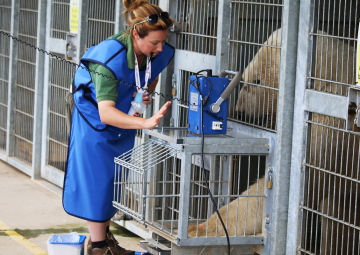
In this article, we once again have the collaboration of our friend Jorge Iván Sánchez Quintero, biologist and animal trainer, who shares how positive reinforcement and progressive habituation to veterinary procedures make a significant difference. The goal? As always, efficient handling and an improved quality of life for these incredible animals.
Hello! My name is Dr. Sara Skiba and I have nearly a decade of experience working with nonhuman primates. My expertise is in great ape social behavior, communication, and cognition. In this article, I will share with you how the Ape Initiative team used positive reinforcement training to administer the COVID-19 vaccination to our closest living relatives – the bonobo.
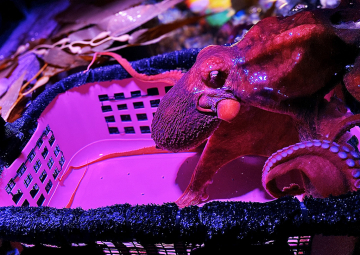
My name is Melanie Johnson, I am Senior Aquarist for Fish and Invertebrates at the Georgia Aquarium in Atlanta. I grew up in someplace you would never think an aspiring marine biologist would grow roots: Phoenix, Arizona (Think of the hottest place on Earth, its probably a little hotter than that…probably).
Sometimes when we are training with our animals we find peculiar situations and we realize that we do not differ so much from each other, because suddenly, we see that they have forgotten a behavior that seemed well learned.
My name is Kim Wilkins and my animal training career began in 2007 when I joined the animal presentations team at Bristol Zoo, training display animals for the educational shows. I then moved to Onmega dolphin therapie in Marmaris Turkey and trained dolphins for public interactions and dolphin-assisted therapy.
Marco Aurelio Núñez is a zootechnician veterinarian from the Autonomous University of Aguascalientes (México), since 2015. He has had professional training in the area of clinical ethology in different academic and zoological institutions in Mexico and in 2020 he worked as a zookeeper and trainer at the "Entre picos y plumas" exhibition at Guadalajara Zoo (Mexico).
Currently, he directs his pets consultancy "Positivet" dedicated to the prevention and resolution of behavioral problems.
Simeon Smeele & Sara Torres Ortiz
The project on short-term memory in pinnipeds began when Dolphin Adventure, to increase the motivation and concentration of animals, trained each and every one of its individuals to perform the behavior, which we will call "repeat". This behavior consists of a signal or SD that basically means "repeat what you just did".
When we train animals to respond to a specific stimulus, regardless of what they are doing or what situation they are in, to go to a particular location, we know it as recall training.
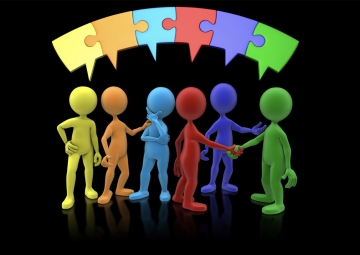
Team communication
The union of a group of people to achieve a common goal is what we know as “team communication”.
For an effective communication, it is necessary to know how to listen, not to have a unique reality and whenever possible, to reach a common agreement in the decisions.
In our case, the purpose is to ensure the care and handling of the animals under our care to ensure their welfare.
As we already know, a behavior is determined by its consequences, so we will keep in mind that depending on how those consequences are, there will be a higher or lower probability of the behavior repeating itself.
Maybe at some point you’ve asked yourself this question, and it’s that sometimes without realizing it some behaviors begin to decay, or the animals begin to directly refuse to do them. In these cases, it is important to be observers, and to perceive the root of the problem, because sometimes the cause may come from a precursor that we have not perceived.